Dong-Seon Chang
Dong-Seon Chang
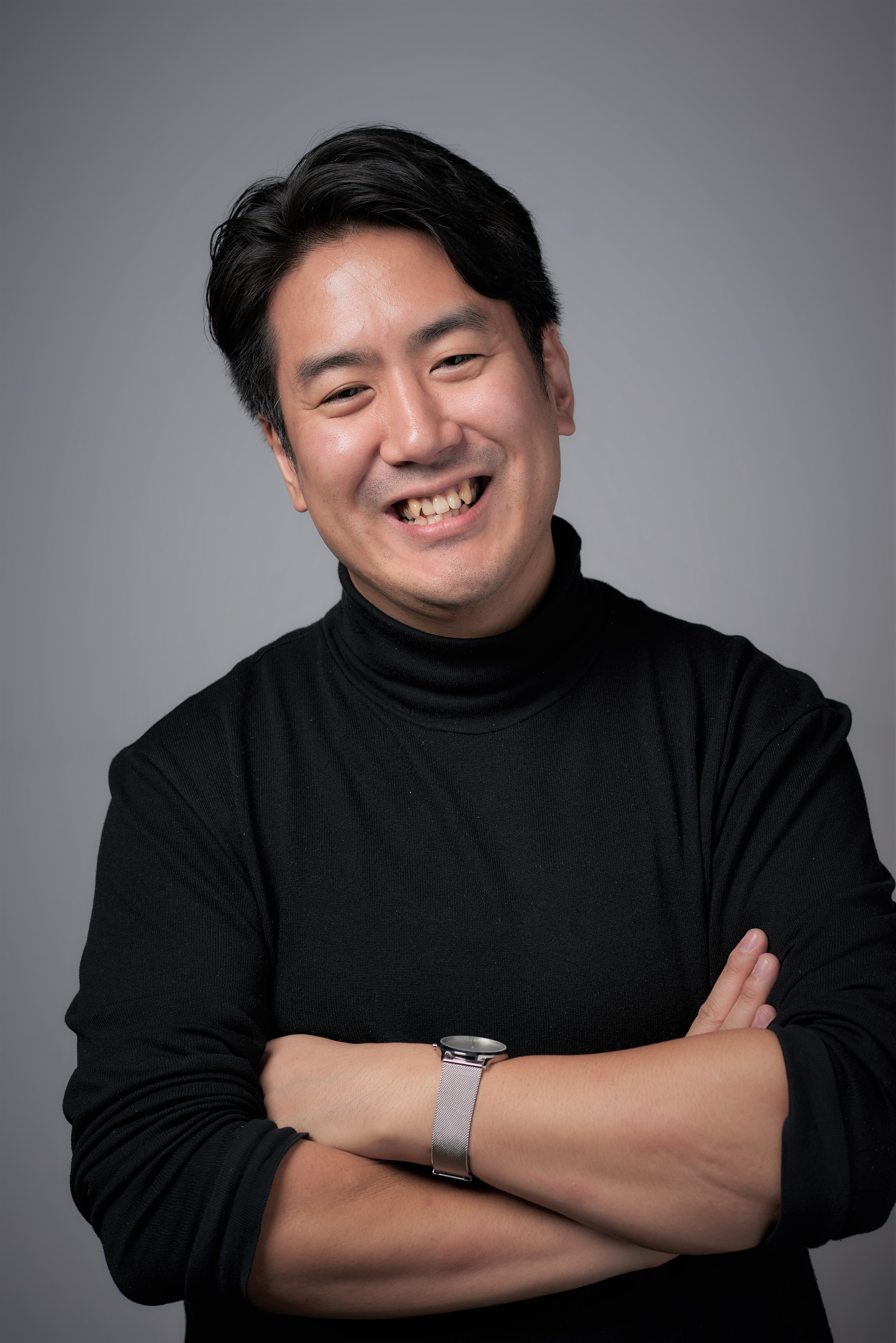
[OVERVIEW]
Neuroscientist, Science Communicator
Lecture Topics
(1) Future & Brain: The Future of AI Through the Lens of Neuroscience
Interprets AI not as a “technology race,” but as part of how the human brain has continuously adapted to change. Traces how knowledge transmission has evolved—from language and writing to communication technologies—and explores the capabilities needed in the AI era (open learning, connectivity, collective intelligence), along with the values and direction of technology use.
(2) Happiness & Brain: The Neuroscience of Happiness
Explains happiness not as a fleeting emotion, but as a structure created by the brain’s reward and social systems. Examines when signals like dopamine, serotonin, and oxytocin are activated, how comparison, evaluation, recognition, and belonging shape happiness, and why autonomy, competence, and connection are essential.
(3) Resilience & Brain: The Neuroscience of Recovery and Mental Fitness
Defines resilience not as a mood, but as the brain’s regulatory capacity. Covers the sequence of stress responses, the anxiety–avoidance loop, dopamine adaptation (stimulation and tolerance), and its link to burnout. Offers practical methods to restore recovery through small actions and awareness of bodily signals (breathing, heart rate, etc.).
(4) Growth & Brain: Expanding Beyond Your Innate Limits
Distinguishes whether “limits” reflect actual capacity or brain-constructed anchors. Explains how to break goals into executable units, accumulate experience, and shift internal benchmarks. Connects growth plateaus, breakthrough moments, flow states, and feedback as learning signals.
(5) Creativity & Brain: The Neuroscience of Creativity and Innovation
Frames creativity not as talent, but as a trainable cognitive process (divergence → convergence). Explains why forcing ideas can block creativity, how shifts and rest enable new connections, and introduces practical frameworks—big questions, problem reframing, novel combinations—along with everyday habits (observation, recording, dialogue).
(6) Leadership & Brain: The Neuroscience of Leadership
Examines leadership as a collective performance mechanism shaped by the social brain. Explains why psychological safety, trust, and communication drive team outcomes, how power influences empathy and ethical judgment, and outlines reproducible principles such as question-driven dialogue, decision logging, fair recognition, and learning-oriented feedback.
(7) Navigation & Brain: Finding Your Path in an Uncertain World
Applies the brain’s “navigation” system to align current position, goals, and pathways. Explores different approaches for problems with and without clear answers, balancing exploration and optimization, and provides a framework to recalibrate direction using key questions: “Now–Why–Where to.”
(8) Education & Brain: Neuroscience for Parents
Reframes child development not in terms of study volume, but as how the brain learns sociality. Highlights the role of play (reciprocity and safe experimentation), the importance of question-making and perspective-building in the AI era, and the design of rhythm, rules, and digital hygiene in an environment of constant notifications—positioning parents as coaches and connectors.
Education
Ph.D. in Human Perception, Cognition, and Action, Max Planck Institute for Brain Research
M.Sc. in Computational Psychophysics, Max Planck Institute for Brain Research
B.Sc. in Biology, University of Konstanz
Professional Experience
(Current)
CEO, Future Explorer Society
Director, Curious Brain Research Institute
Outside Director, NC Cultural Foundation
Honorary Mayor, Seoul Metropolitan Government
(Former)
Outside Director, Amorepacific Gonggam Foundation
Outside Director, Kakao Impact Foundation
Full-Time Professor, Institute for Creative Convergence Education, Hanyang University
Head of Future Technology Strategy Team, Strategic Technology Division, Hyundai Motor Group
Publications
Mein Hirn Hat Seinen Eigenen Kopf (2016)
There Is Another Brain Inside the Brain (2017)
The Brain Wants to Dance: The Science of Rhythm and Movement (2018)
How AI Changes the World: Dr. Jang Dong-sun’s Guide to Artificial Intelligence (2022)
Chang Dong-Seon’s Future Science Project 1: AI Opens a New World (Planned, 2025)
Neuroscientist, Science Communicator
Lecture Topics
(1) Future & Brain: The Future of AI Through the Lens of Neuroscience
Interprets AI not as a “technology race,” but as part of how the human brain has continuously adapted to change. Traces how knowledge transmission has evolved—from language and writing to communication technologies—and explores the capabilities needed in the AI era (open learning, connectivity, collective intelligence), along with the values and direction of technology use.
(2) Happiness & Brain: The Neuroscience of Happiness
Explains happiness not as a fleeting emotion, but as a structure created by the brain’s reward and social systems. Examines when signals like dopamine, serotonin, and oxytocin are activated, how comparison, evaluation, recognition, and belonging shape happiness, and why autonomy, competence, and connection are essential.
(3) Resilience & Brain: The Neuroscience of Recovery and Mental Fitness
Defines resilience not as a mood, but as the brain’s regulatory capacity. Covers the sequence of stress responses, the anxiety–avoidance loop, dopamine adaptation (stimulation and tolerance), and its link to burnout. Offers practical methods to restore recovery through small actions and awareness of bodily signals (breathing, heart rate, etc.).
(4) Growth & Brain: Expanding Beyond Your Innate Limits
Distinguishes whether “limits” reflect actual capacity or brain-constructed anchors. Explains how to break goals into executable units, accumulate experience, and shift internal benchmarks. Connects growth plateaus, breakthrough moments, flow states, and feedback as learning signals.
(5) Creativity & Brain: The Neuroscience of Creativity and Innovation
Frames creativity not as talent, but as a trainable cognitive process (divergence → convergence). Explains why forcing ideas can block creativity, how shifts and rest enable new connections, and introduces practical frameworks—big questions, problem reframing, novel combinations—along with everyday habits (observation, recording, dialogue).
(6) Leadership & Brain: The Neuroscience of Leadership
Examines leadership as a collective performance mechanism shaped by the social brain. Explains why psychological safety, trust, and communication drive team outcomes, how power influences empathy and ethical judgment, and outlines reproducible principles such as question-driven dialogue, decision logging, fair recognition, and learning-oriented feedback.
(7) Navigation & Brain: Finding Your Path in an Uncertain World
Applies the brain’s “navigation” system to align current position, goals, and pathways. Explores different approaches for problems with and without clear answers, balancing exploration and optimization, and provides a framework to recalibrate direction using key questions: “Now–Why–Where to.”
(8) Education & Brain: Neuroscience for Parents
Reframes child development not in terms of study volume, but as how the brain learns sociality. Highlights the role of play (reciprocity and safe experimentation), the importance of question-making and perspective-building in the AI era, and the design of rhythm, rules, and digital hygiene in an environment of constant notifications—positioning parents as coaches and connectors.
Education
Ph.D. in Human Perception, Cognition, and Action, Max Planck Institute for Brain Research
M.Sc. in Computational Psychophysics, Max Planck Institute for Brain Research
B.Sc. in Biology, University of Konstanz
Professional Experience
(Current)
CEO, Future Explorer Society
Director, Curious Brain Research Institute
Outside Director, NC Cultural Foundation
Honorary Mayor, Seoul Metropolitan Government
(Former)
Outside Director, Amorepacific Gonggam Foundation
Outside Director, Kakao Impact Foundation
Full-Time Professor, Institute for Creative Convergence Education, Hanyang University
Head of Future Technology Strategy Team, Strategic Technology Division, Hyundai Motor Group
Publications
Mein Hirn Hat Seinen Eigenen Kopf (2016)
There Is Another Brain Inside the Brain (2017)
The Brain Wants to Dance: The Science of Rhythm and Movement (2018)
How AI Changes the World: Dr. Jang Dong-sun’s Guide to Artificial Intelligence (2022)
Chang Dong-Seon’s Future Science Project 1: AI Opens a New World (Planned, 2025)